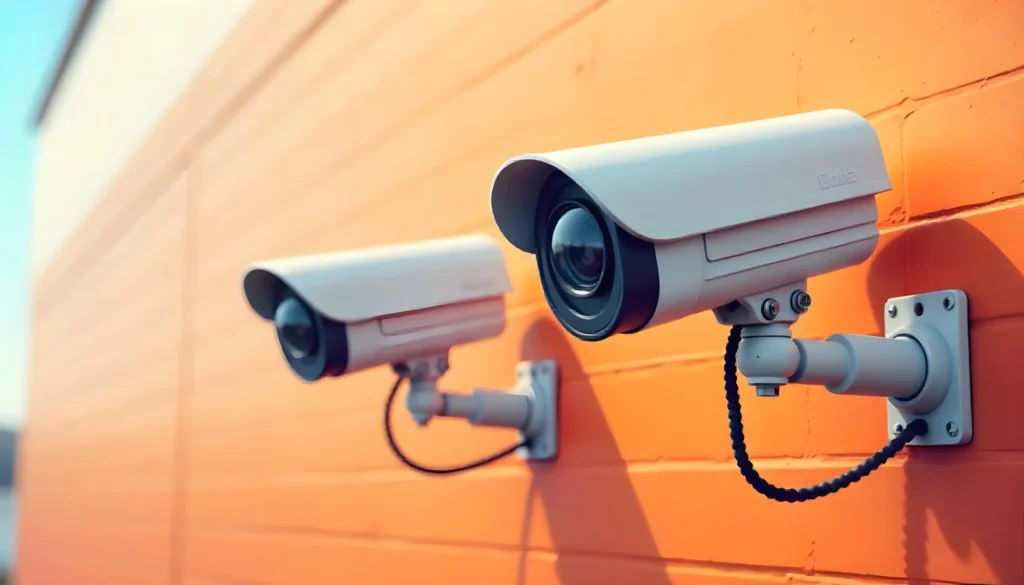
Installing security cameras is only one part of creating a useful video surveillance system. Where those cameras are positioned can have a major effect on what they can see, how much area they cover, and whether important activity is captured clearly.
A camera pointed at the wrong angle may leave an entrance partially hidden. A camera placed too high may capture a wide area but provide less useful detail. Another camera may cover a large space while leaving a nearby access point outside its field of view.
That is why CCTV camera placement should be considered before installation begins.
A good surveillance plan starts by identifying the areas that need monitoring, understanding how people move around the property, and determining where cameras can provide useful coverage without creating unnecessary blind spots.
Whether you are securing a home, office, retail location, or another property, these nine areas are worth considering when planning a CCTV system.
1. Main Entrance
The main entrance is one of the first areas to consider.
For a home, this may be the front door. For a business, it could be the primary customer entrance or employee access point.
An entrance camera can help provide a record of people approaching or entering the property. It can also allow you to see activity around the doorway without relying only on someone being physically present.
When planning the position, consider the direction people approach from. A camera should have a useful view of the entry area rather than being positioned so that visitors are only seen from an extreme angle.
Lighting should also be considered. Bright sunlight, shadows, and nighttime conditions can all affect image quality.
2. Driveway and Parking Areas
Driveways and parking areas can cover a much larger space than a doorway, so camera placement requires more planning.
A camera positioned to monitor a driveway may need a wider field of view than one covering an entrance. At the same time, a very wide view can reduce the amount of detail visible in individual areas.
For residential properties, a driveway camera may provide coverage of vehicles approaching the house.
For commercial properties, parking areas may have multiple entry and exit points that need to be considered separately.
Before installation, identify:
- Vehicle entry points
- Vehicle exit points
- Pedestrian paths
- Areas with limited lighting
- Spaces where vehicles are commonly parked
- Locations where cameras can be mounted securely
Large parking areas may require more than one camera to provide useful coverage.
3. Back and Side Entrances
The main entrance usually receives the most attention, but secondary entrances should not be overlooked.
Side doors, rear doors, service entrances, and other less-visible access points can create gaps in a surveillance plan if they are not considered.
Walk around the property and identify every door that provides access inside.
A residential property may have:
- A back door
- Garage access
- Side doors
- Basement entrances
- Patio doors
A business may also have employee entrances, delivery doors, or service areas.
Each access point does not necessarily require its own camera. The goal is to determine which locations need direct coverage and whether a nearby camera can provide an adequate view.
4. Garages and Loading Areas
Garages and loading areas often contain valuable equipment, vehicles, inventory, or other property that may benefit from surveillance.
For homes, a garage camera can monitor the area where vehicles and tools are stored. Depending on the layout, a camera may also help cover the garage entrance or the driveway leading toward it.
Commercial properties may have loading docks where deliveries occur throughout the day. These spaces can have frequent movement involving employees, vendors, and vehicles.
Camera placement should account for both the immediate area and the routes people use to enter and leave.
It is also important to consider overhead doors and other moving equipment that could temporarily obstruct a camera’s view.
5. Reception and Common Areas
Inside a commercial property, reception areas and common spaces may be useful locations for surveillance cameras.
A reception camera can provide visibility over a primary indoor area and help document activity near the front of a business.
Other common areas might include:
- Hallways
- Waiting areas
- Lobbies
- Shared workspaces
- Building access points
Indoor camera placement should be planned carefully so the system provides useful coverage without unnecessarily monitoring private spaces.
The purpose of surveillance should guide the placement. A camera should have a clear reason for being installed in a particular location.
6. High-Value or Restricted Areas
Some areas require more attention because they contain valuable property, sensitive equipment, or restricted materials.
In a business, this could include a storage room, equipment room, server area, or inventory space.
At home, homeowners may want additional visibility around areas where expensive equipment, vehicles, or other valuables are stored.
A camera in these locations can provide another layer of visibility.
However, the camera should be positioned so that it actually captures the relevant access point or activity. Simply placing a camera inside a valuable storage area does not necessarily provide useful coverage if someone can enter without being clearly visible.
Consider both the room itself and the route used to reach it.
7. Blind Spots Around the Property
After identifying the obvious camera locations, walk around the property and look for areas that cannot be seen from those positions.
Blind spots can appear behind:
- Walls
- Fences
- Large landscaping
- Building corners
- Outdoor structures
- Vehicles
- Other obstructions
A property can have several cameras and still have gaps in coverage.
This is why camera placement should be planned as a complete system rather than as a collection of individual cameras.
One useful approach is to sketch the property and mark doors, windows, driveways, walkways, and other important areas. Then identify what each proposed camera can see.
The goal is not necessarily to eliminate every square foot that cannot be viewed. Instead, focus on areas where visibility matters most.
8. Outdoor Areas With Limited Visibility
Some parts of a property naturally receive less attention because they are located away from main entrances.
Examples include:
- Side yards
- Rear property lines
- Detached structures
- Outdoor storage areas
- Fences and gates
- Less-used walkways
These areas can be particularly important when they provide another route onto the property.
Outdoor camera placement should take weather exposure, lighting, mounting surfaces, and the desired viewing angle into account.
Nighttime visibility is also important. A location that looks clear during daylight may provide very different images after dark.
Before installation, consider how the camera will perform at different times of day.
9. Gates and Property Access Points
Gates can control access to residential and commercial properties, making them another useful location to evaluate.
A gate camera may help monitor vehicles or people entering through a controlled access point.
For larger properties, there may be multiple gates that connect to different roads or sections of the property.
Consider where people approach the gate, where vehicles stop, and what direction they travel afterward.
A camera should ideally provide enough visibility to capture useful activity without being blocked by the gate itself.
If the property uses additional access-control technology, camera placement can also be planned alongside those systems.
How to Plan CCTV Coverage Before Installation
Before choosing specific camera locations, start with a basic property assessment.
Walk around the building during the day and at night. Identify entrances, high-traffic areas, valuable property, and locations where visibility is limited.
Then consider what each camera is expected to accomplish.
For example, one camera may be intended to monitor a front entrance while another covers the driveway. A third may be focused on a rear access point.
This approach helps avoid installing cameras simply because a location appears convenient.
The site describes its CCTV service as video surveillance that can transmit camera signals to monitors, computers, smartphones, and tablets. That means the surveillance system should be planned around both the physical camera locations and how the property owner intends to view the system.
Camera Angle Matters as Much as Location
Choosing the right location does not automatically guarantee useful footage.
The camera’s angle can determine how much of the scene is visible and how clearly people, vehicles, or other activity can be identified.
A camera that is pointed too far toward the sky may waste part of its field of view. One pointed too far downward may miss approaching activity.
Nearby objects can also create problems.
Trees, walls, signs, rooflines, and other structures can partially block the image.
Before finalizing a position, consider:
- Camera height
- Viewing direction
- Field of view
- Nearby obstacles
- Lighting conditions
- Distance from the activity being monitored
These details are especially important for entrances and other areas where identifying people or vehicles may matter.
Daytime and Nighttime Coverage
A surveillance plan should not be based only on daytime conditions.
Outdoor lighting changes throughout the day. Direct sunlight can create glare, while nighttime darkness can reduce visibility.
Walk the property during the evening and identify areas that become difficult to see.
Outdoor lights can affect camera performance as well. A bright light directly facing a camera may create an overly bright area in the image while making surrounding details harder to see.
The position of existing lighting should therefore be considered during installation.
For properties that need around-the-clock visibility, nighttime performance should be part of the camera selection and placement process.
Residential vs. Commercial CCTV Placement
The basic principles of camera placement apply to both homes and businesses, but the priorities can differ.
At a home, common priorities may include entrances, driveways, garages, side gates, and backyard access points.
A business may require broader coverage across entrances, parking areas, employee access points, inventory areas, and other operational spaces.
Commercial properties can also have larger buildings and more complicated traffic patterns.
The site serves both residential and commercial customers with video surveillance solutions, so the appropriate setup can be tailored to the property’s layout and intended use.
Common CCTV Placement Mistakes
Installing Only One Camera
One camera may not provide enough coverage for a property with several access points.
Ignoring Secondary Entrances
Side and rear entrances can be overlooked when attention is focused on the front door.
Choosing Convenient Mounting Locations
The easiest place to mount a camera is not always the most useful viewing position.
Forgetting Nighttime Conditions
A location that provides excellent daytime visibility may perform differently after sunset.
Blocking the Camera’s View
Trees, structures, signs, and other objects can create blind spots after installation.
Using the Same Camera Position Everywhere
Different areas have different coverage requirements. Entrances, parking lots, and interior rooms may need different approaches.
Questions to Ask Before Installing a CCTV System
A professional consultation should cover more than the number of cameras required.
Ask how each proposed camera will cover the property and whether important access points remain outside the field of view.
You can also ask about remote viewing, indoor and outdoor equipment, nighttime visibility, recording, and system expansion.
Useful questions include:
- Which areas should receive priority coverage?
- Where are the property’s biggest blind spots?
- How many cameras are needed for useful coverage?
- What camera angles work best for each location?
- How will the system perform at night?
- Can cameras be viewed remotely?
- Can the system be expanded later?
These questions can help you understand how the proposed surveillance system will work as a whole.
Frequently Asked Questions
Where should a CCTV camera be placed?
Common locations include main entrances, driveways, parking areas, side and rear entrances, garages, gates, and other areas where visibility is important.
How many CCTV cameras does a property need?
There is no fixed number. The requirement depends on the property’s size, layout, access points, blind spots, and desired coverage.
Should CCTV cameras be placed inside or outside?
Both may be appropriate. Outdoor cameras can monitor entrances and exterior areas, while indoor cameras may cover reception areas, hallways, storage rooms, or other designated spaces.
Can CCTV cameras be viewed remotely?
The site describes video surveillance systems that can transmit video to computers, smartphones, tablets, and other designated viewing locations.
Should CCTV cameras cover every part of a property?
Not necessarily. A surveillance plan should prioritize important entrances, access routes, valuable areas, and locations where visibility is most useful.
Conclusion
Effective surveillance starts with thoughtful planning. The number of cameras matters, but their locations, viewing angles, lighting conditions, and relationship to the property’s layout are equally important.
By identifying entrances, parking areas, garages, gates, valuable spaces, and potential blind spots before installation, property owners can create a CCTV system designed around the areas that matter most.
If you are planning a new surveillance system or reviewing the coverage of an existing one, contact JL Theaters and CCTV to discuss your property and CCTV installation needs.